
Testosterone: The Hormone for Male Wellbeing
Testosterone influences far more than muscle. This introduction explains its role in male wellbeing, how it is regulated and why symptoms need proper assessment.
By Kieran · 30 April 2026 · 5 min read
Testosterone is often discussed as though it were a personality trait: more means stronger, less means weaker. The reality is more useful and less theatrical. Testosterone is one hormone within a complex endocrine system, and it contributes to sexual function, sperm production, muscle and bone health, red-blood-cell production and the distribution of body fat.
This article began with my own experience of low drive, poor training and a life that had entered a downward spiral. Lifestyle changes helped me, but similar symptoms can arise from many causes. Persistent fatigue, sexual changes or low mood deserve proper medical assessment rather than self-diagnosis or unsupervised hormone use.
In brief
- Testosterone affects several systems, not only muscle growth and libido.
- Low energy or low mood does not prove that testosterone is low.
- Diagnosis requires symptoms together with consistently low blood results, usually checked on more than one morning.
- Sleep, body composition, illness, medication and stress can all influence the wider hormonal picture.
The camping trip that changed my direction
A few years ago, I had lost momentum. My business was struggling, my relationship felt flat, and both diet and training had deteriorated. A friend took me on a five-day camping trip with several other men.
We trained and practised yoga in the morning, hiked during the day, built fires in the evening and slept as soon as our heads reached the makeshift pillows. There was little processed food, no room for passivity and an immediate reason to contribute.
By the end, I felt alert, motivated and physically alive again. At the time I described this as feeling testosterone course through my veins. Looking back, that was an interpretation, not a measurement. The improvement could have involved sleep, movement, daylight, companionship, purpose, reduced distraction and several hormonal or neurological systems working together.
That distinction matters. Testosterone is important, but it should not become a single explanation for every rise or fall in a man’s confidence.
What testosterone is
Testosterone is an androgen, a class of hormones involved in male sexual development and reproductive function. In men, most is produced by the testes under signals from the brain and pituitary gland. Levels vary between individuals and fluctuate through the day.
Testosterone contributes to:
- sexual desire and erectile function;
- sperm production and fertility;
- muscle mass and strength;
- bone density;
- red-blood-cell production;
- body-hair and voice changes during puberty;
- energy and mood, although these symptoms are influenced by many other factors.
It is not a moral substance. High or low testosterone does not make a man virtuous, aggressive, courageous or weak by itself. Biology influences the conditions in which behaviour occurs; it does not write the whole script.
Symptoms are not a diagnosis
Low sexual desire, fewer spontaneous erections, reduced energy, depressed mood, loss of muscle, infertility and weaker bones can occur with testosterone deficiency. They can also occur with poor sleep, depression, relationship difficulties, chronic illness, medication, obesity, excessive training or other endocrine problems.
For that reason, major clinical guidance does not diagnose hypogonadism from symptoms alone. The Endocrine Society recommends both compatible symptoms and unequivocally, consistently low testosterone, confirmed by repeat morning testing. A clinician may then investigate why the level is low.
Total and free testosterone
Most testosterone in the blood is carried by proteins, mainly sex hormone-binding globulin and albumin. A small proportion circulates freely. Total testosterone measures the combined amount. Free testosterone can add useful context when the total result does not fit the symptoms or when binding-protein levels may be unusual.
The old claim that all bound testosterone is biologically useless is too crude. Albumin-bound testosterone is relatively available to tissues, while tightly SHBG-bound testosterone is less available. Interpretation depends on the person, the assay and the clinical context.
What can affect testosterone?
Testosterone can be reduced by disorders affecting the testes, pituitary gland or hypothalamus. It can also be associated with acute or chronic illness, obesity, severe sleep disruption and some medicines, including long-term opioids or glucocorticoids.
Lifestyle does matter, but there is no reliable five-minute “boost”. Strength training, adequate energy intake, regular sleep, a healthy body composition and treatment of underlying illness help create better conditions for endocrine health. A stressful phone call does not necessarily erase a week of testosterone production, and soy food is not a credible explanation for widespread male hormonal collapse.
The virtuous cycle
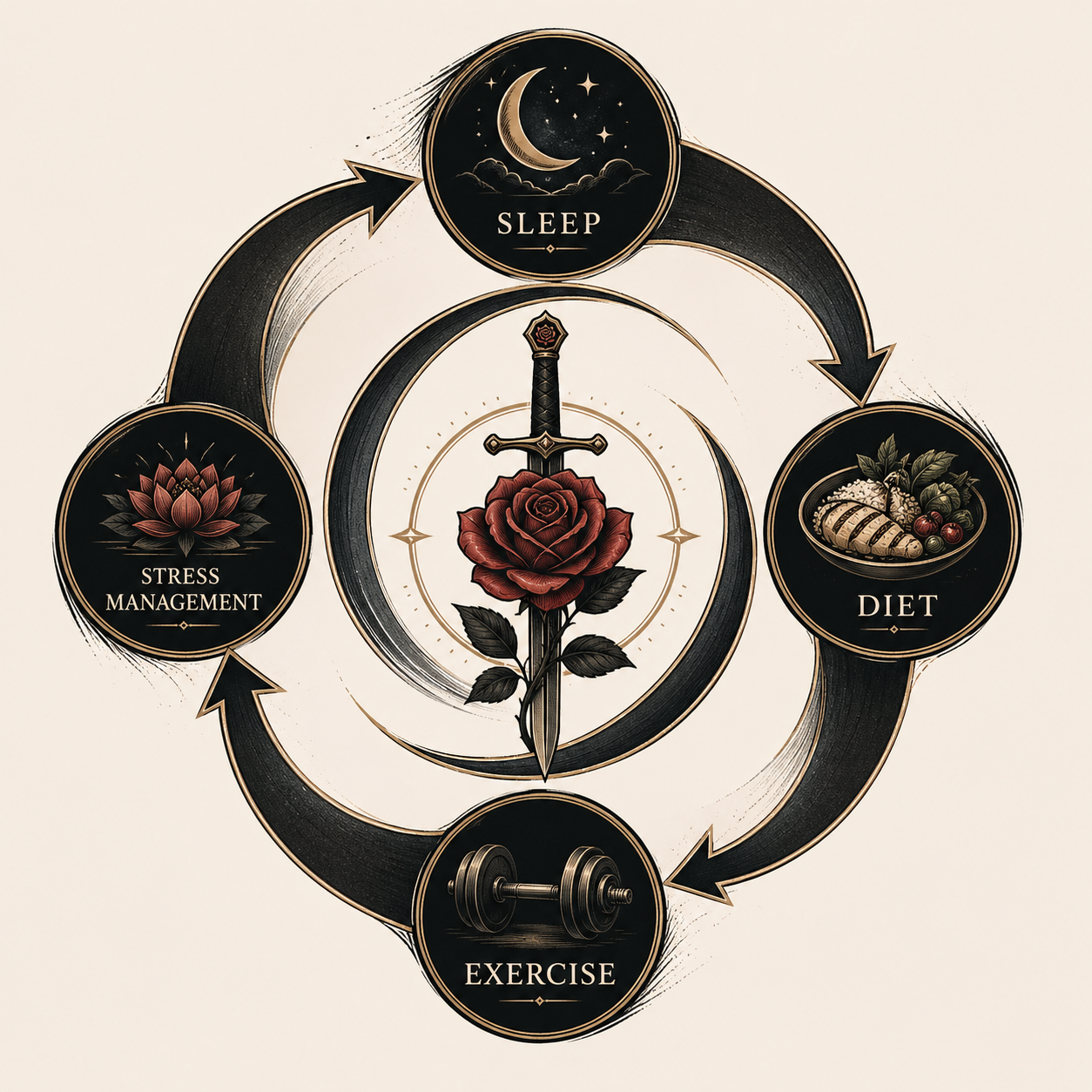
The most useful part of my original argument remains the cycle. When sleep, movement, food and purpose deteriorate together, each makes the next harder. When one improves, it can make improvement elsewhere easier.
That cycle is larger than testosterone. Training may improve sleep. Better sleep may improve appetite regulation and motivation. Meaningful work may reduce the urge to numb oneself. Time with trusted men may restore accountability and perspective.
Testing and treatment
Men concerned about low testosterone should speak to a qualified clinician. Testing is usually performed in the morning and repeated because levels vary. Further blood tests may be needed to distinguish a problem in the testes from one involving the pituitary or hypothalamus.
Testosterone treatment is appropriate for some men with confirmed hypogonadism, but it requires assessment and monitoring. It is not a general vitality supplement, and external testosterone can suppress sperm production, which matters to men who want children.
Build the conditions, then measure carefully
My mistake was allowing several parts of life to deteriorate together and treating the resulting state as though it were my new personality. Training, food, sleep, purpose and social connection had all weakened. Restoring them created a virtuous cycle.
That experience does not mean every man with low energy has low testosterone, or that testosterone is the master explanation for male wellbeing. It means the body and the rest of life continually affect one another.
The practical starting point is unglamorous: sleep consistently, train intelligently, eat adequately, manage chronic stress and seek qualified medical advice when symptoms persist.
Further reading
Tagged
Male development · Modern life · Self-mastery · Wellbeing
Share this essay