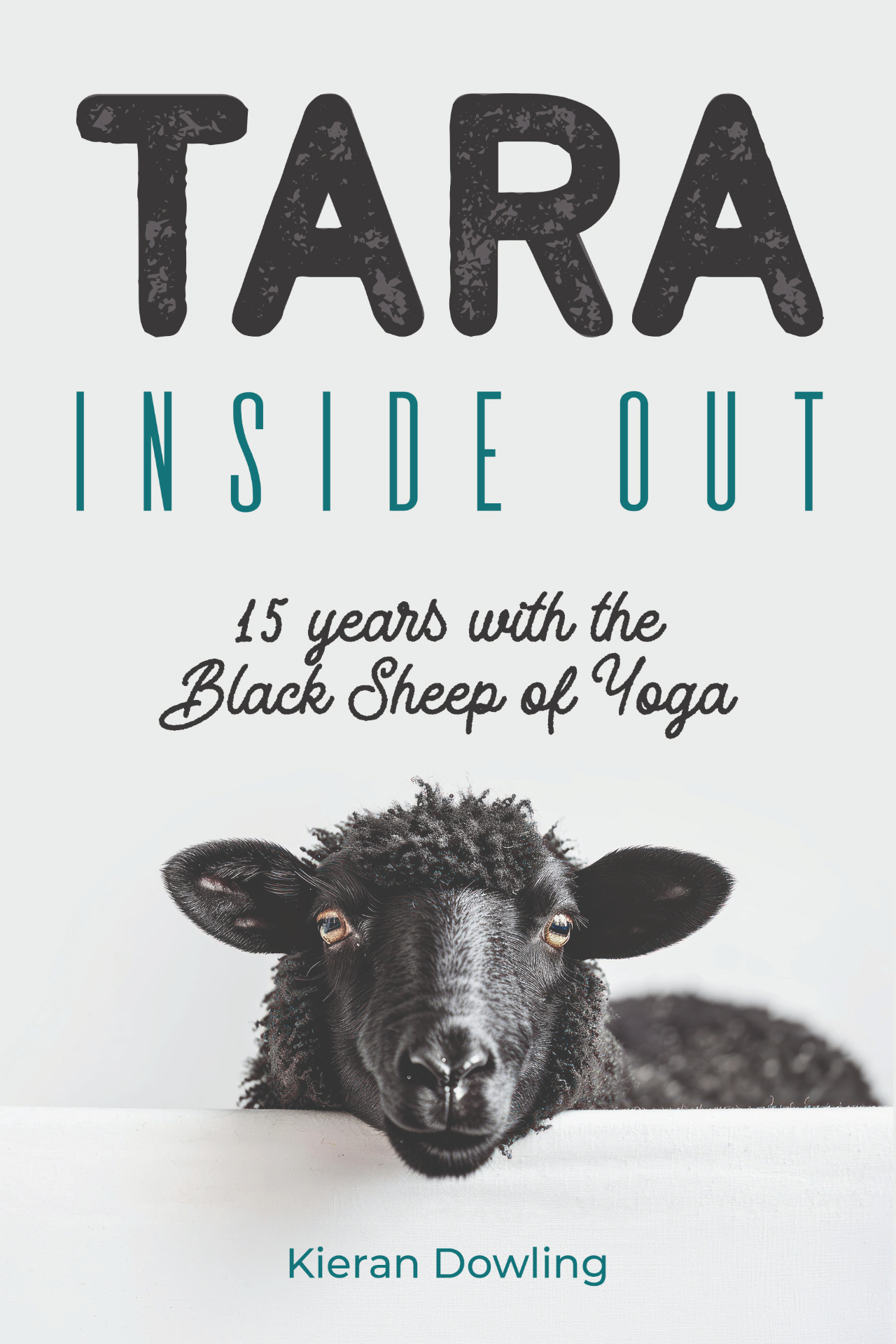
15 Years With the Black Sheep of Yoga
I entered a controversial tantric yoga school looking for meaning and stayed for 15 years. This is why I decided to write about the experience from inside.
By Kieran · 23 May 2026 · 5 min read
I arrived in London in 2007 wanting reinvention, not religion. I was 27, lonely, cynical and determined to build a self untouched by the place and people I had left behind. Within two years, a search that began with sexual insecurity led me into a tantric yoga school that would become my spiritual path, social world and working life for the next 15 years.
Years later, documentaries and investigations would describe that world largely through allegations, institutional controversy and the experiences of people who felt harmed. Those accounts matter. They also described a place I had known intimately in ways I sometimes struggled to recognise. The distance between the public story and my own life became one reason for writing Tara: Inside Out.
In brief
- People enter intensive spiritual communities through ordinary human needs such as belonging, meaning, love and transformation.
- A community can contain profound benefit, serious mistakes and sharply different personal experiences at the same time.
- An insider memoir should not be treated as the final verdict, but neither should it be excluded from the evidence.
Leaving Ireland to become somebody else
Irish migration to London has many familiar motives: work, opportunity, escape and the chance to begin again. Mine contained all four, though I would have struggled to name them at the time.
I moved into Fulham shortly after my birthday. A close childhood friend already lived in the city, but I deliberately avoided contacting him. I wanted anonymity. In a metropolis of millions, I imagined I could shed my inherited identity and construct another without witnesses.
The first year delivered freedom without direction. I moved between temporary jobs, parties, drugs, alcohol and the pursuit of women. Outwardly, it resembled adventure. Underneath, I remained isolated and suspicious of love. I did not believe in God, and vulnerability looked more like a tactical error than a virtue.
The unlikely doorway into Tantra
At the time I was involved in the pick-up community made famous by Neil Strauss’s The Game. I had spent years feeling invisible to women and was trying to solve that pain through technique, confidence and repeated exposure to rejection.
One evening, another man mentioned a friend who needed volunteers for a short course on becoming multi-orgasmic. The language was irresistible to a sexually insecure man in his twenties. The course took place over several Saturdays in a disused Camden warehouse and did not deliver what it promised.
It did, however, leave me convinced that somebody must know more. That search brought me to Tara Yoga Centre.
What I wanted and what I found
I entered looking for erotic training. Tara presented sexuality inside a much larger spiritual system. Love, discipline, meditation, service, Hatha Yoga, devotion and a belief in transformation surrounded the practices that had first attracted me.
This created an immediate conflict. I had grown up in a devout Catholic environment in the west of Ireland. My upbringing was not the unrelenting misery sometimes associated with Irish Catholic memoir, but shame around the body and sexuality was part of the atmosphere. Religion and erotic life belonged in separate rooms.
At Tara, I encountered people who appeared far more comfortable with their bodies and desires. Their freedom attracted me and exposed me. To participate fully, I would have to question beliefs I had barely realised I carried.
Freedom, authority and the difficult questions
Sexuality was not the only confrontation. The school also valued guidance from teachers and more experienced practitioners. For somebody who had spent years resisting authority, the invitation to admit that another person might see something I did not was deeply uncomfortable.
These two features, the spiritual treatment of eroticism and the acceptance of hierarchical guidance, later became central to public criticism of Tara and related organisations. They are also areas in which genuine growth and genuine danger can sit unusually close together. Erotic ideals can become liberating or manipulative. Guidance can become apprenticeship or control. Context, consent, conduct and accountability matter.
My own experience cannot settle those questions for everyone. It can describe how they appeared from one position inside.
Going all in
I did not remain a casual student. The community gradually became the centre of my life. My friendships, relationships, work and free time increasingly came from the same world. I practised, volunteered, taught and accepted disciplines that would have seemed incomprehensible to the man who had arrived in London.
The path was demanding. It was also, for me, overwhelmingly constructive. It taught me forms of service, concentration, self-observation, erotic discipline and devotion that changed how I understood both masculinity and spiritual life.
That positive experience does not invalidate people who describe harm. Their accounts do not erase mine. The temptation in public controversies is to force every person into one collective biography. Real communities are rarely so uniform, especially across countries, teachers and decades.
Stepping outside the world
After 17 years in London, the pull towards nature and a different rhythm became stronger. Returning to Ireland created the first substantial physical and psychological distance I had had from the community in 15 years.
Distance changed the questions. Inside a total way of life, choices that once seemed obvious can become visible again. At the same time, media coverage was presenting Tara primarily through accusation and scandal. I wanted to understand both my own commitment and the gulf between what I remembered and what the public was being shown.
The question behind the book became simple and difficult: was it worth it?
Why I wrote Tara: Inside Out
The book follows the practices and ideas that shaped those years, including Karma Yoga, Hatha Yoga, meditation, community life and the tantric attempt to integrate spirituality with sexuality. It also examines the costs, contradictions and uncomfortable questions that arise when a person gives a path so much of his identity.
It is not intended as a legal judgement, public-relations defence or comprehensive history. It is an insider account. That means it is limited, subjective and necessary.
Debates about controversial spiritual groups often collapse into binaries: liberated or controlled, sacred or corrupt, victim or defender. Those categories may describe parts of reality, but they rarely contain a whole life. My years at Tara included discipline, friendship, sacrifice, absurdity, love, conflict and transformation.
The value of testimony without monopoly
No single memoir should monopolise the truth. I cannot tell another participant what happened to them, and they cannot tell me that what transformed my life was imaginary because it does not fit their account.
A mature record must hold differences rather than erase them. Allegations require investigation. Institutions require accountability. Benefits should not become excuses for harm. Harm should not require us to pretend that nobody found value, community or spiritual depth.
I left Ireland wanting a new identity. I returned with less confidence that identity is something solid enough to possess. What I did know was that those 15 years had formed me, and that the story deserved to be told from the inside as well as observed from outside.
Tagged
Community · Spirituality · Tantra · Writing · Yoga
Share this essay